Solid Contacts vs Stamped Contacts for DEUTSCH Connectors
Solid vs stamped contacts for DEUTSCH connectors: sizes 12, 16, and 20 compared by current, wire range, and crimping, so you can choose the right contact.
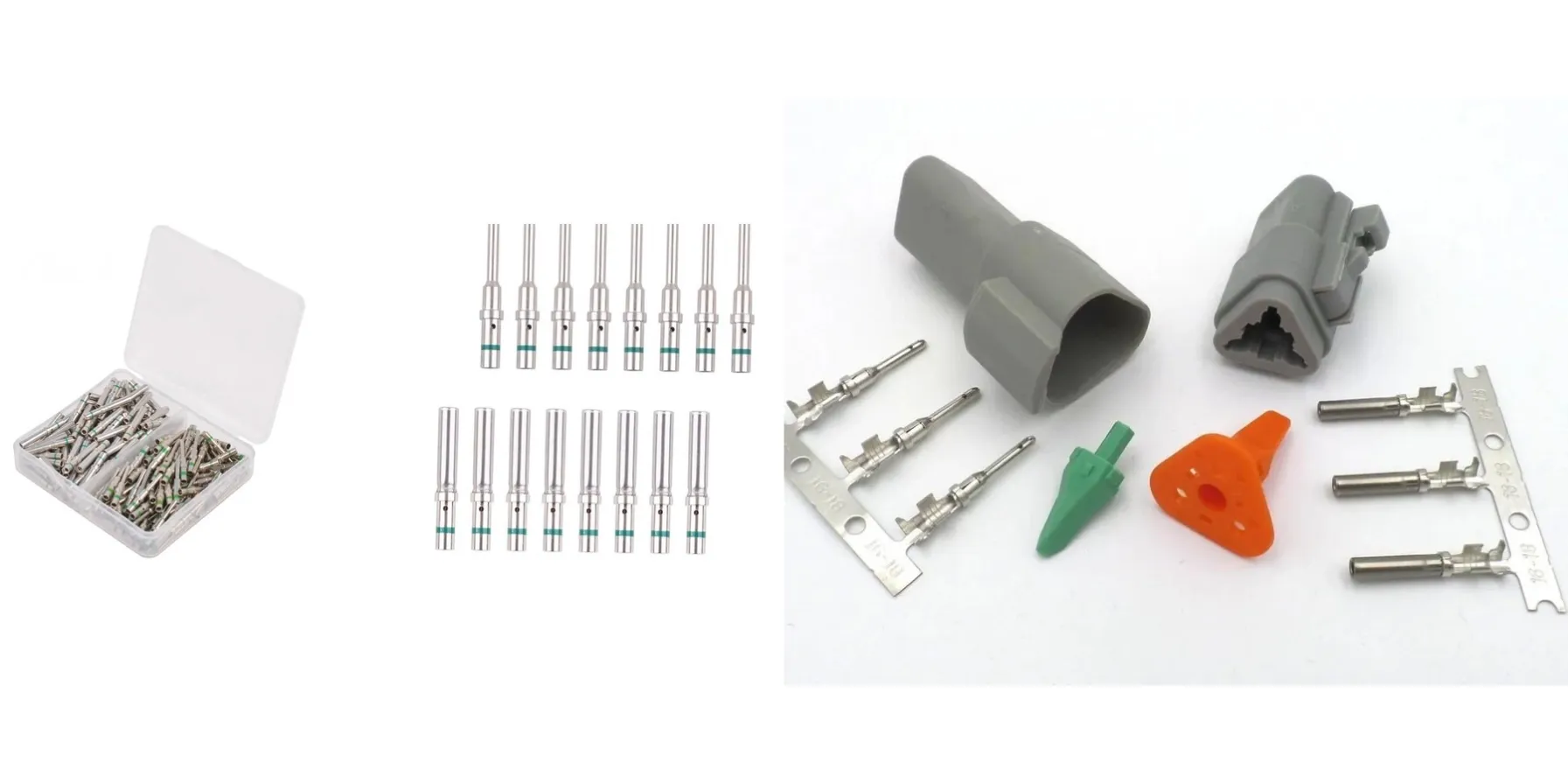
Solid contacts and stamped contacts both fit DEUTSCH connectors, but they are made in different ways and suit different jobs. Solid contacts, also known as machined contacts, are turned from a solid piece of metal. Stamped contacts are formed from flat strip metal, bent into shape and trimmed. This guide explains the difference, compares sizes 12, 16, and 20, and shows when to use each type.
Solid Contacts (0460 Series) at a Glance
Solid contacts are machined from bar stock, so the pin or socket is one solid piece with a smooth, even surface. They are the original DEUTSCH 0460 series contact and are known for a stable connection under vibration and heat cycling.
- Construction: machined from solid copper alloy, then plated with gold or nickel.
- Sizes: size 12, size 16, and size 20 — the same sizes used across the DT, DTM, DTP, and DTHD series.
- Strengths: high mechanical strength, low contact resistance, reliable mating over many cycles.
- Trade-off: more expensive to make, so the unit price is higher than stamped contacts.
Stamped Contacts (0462 Series) at a Glance
Stamped contacts, also called stamped-formed contacts, start as flat strip metal that is stamped, formed into a socket or pin shape, and plated. They are the 0462 series contact and the standard choice for volume production.
- Construction: stamped and formed from strip metal, then plated with tin or gold.
- Sizes: size 12, size 16, and size 20, interchangeable with solid contacts in the same housings.
- Strengths: lower cost, fast to produce in large quantities, and easy to crimp with standard tooling.
- Trade-off: slightly lower mechanical strength than a machined contact, so they suit standard-duty circuits best.
Solid vs Stamped: Side-by-Side Comparison
- Current rating by size: size 20 up to 7.5 A, size 16 up to 13 A, size 12 up to 25 A — the same for both types, because the rating follows the contact size and the connector series.
- Wire range: size 20 fits AWG 22–20, size 16 fits AWG 20–14, size 12 fits AWG 14–12.
- Durability: solid contacts handle more mating cycles and harsher vibration; stamped contacts are rated for standard duty and repeated service.
- Cost: stamped contacts cost less per piece and are the economical choice for large harness runs.
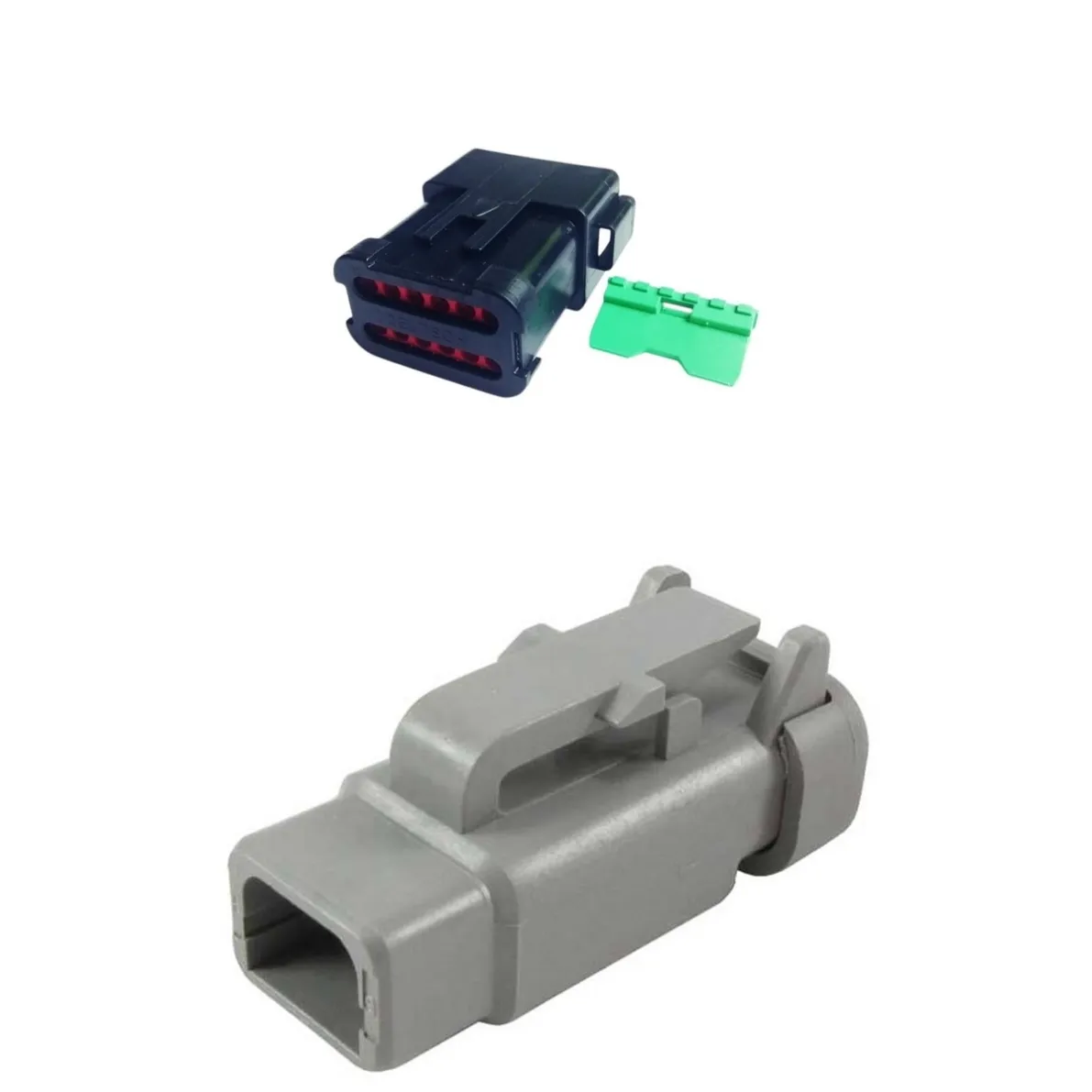
- Interchangeability: both types snap into the same DT, DTM, DTP, and DTHD housings and use the same wedgelocks and seals.
When to Use Solid Contacts
Choose solid contacts when reliability matters most: engine and chassis circuits, heavy equipment that works under constant vibration, and any connector that will be mated and unmated many times during service. If the harness runs in a hot engine bay or on an off-highway machine, the machined contact is the safer choice.
When to Use Stamped Contacts
Choose stamped contacts for standard-duty wiring and volume production: cab and dashboard signals, lighting circuits, and multi-way harnesses where cost per circuit matters. They are also a good choice for repair and replacement work, where the connector is serviced occasionally rather than daily.
Crimping Notes for Both Types
Solid Contact Crimping
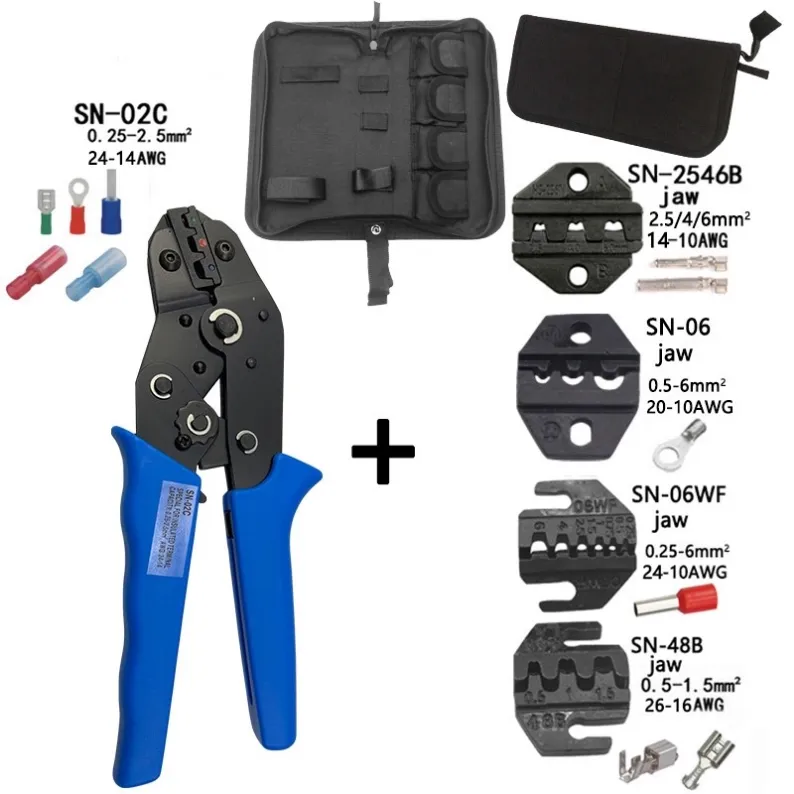
Use a crimp tool matched to the contact size and wire gauge, with the correct crimp die. Solid contacts crimp in a closed barrel: the wire strands must fill the barrel without gaps, and the crimp must be tight enough to pass a pull test. Do not solder a solid contact after crimping — solder makes the joint brittle and can wick into the contact spring.
Stamped Contact Crimping
Stamped contacts usually have an open barrel with insulation crimp wings. Set the crimper so the conductor wings grip the bare wire and the insulation wings grip the wire insulation without cutting it. Check that the contact still slides freely into the housing after crimping and that the locking lance is not bent.
How to Choose in 3 Steps
- Match the size to the circuit: size 20 for up to 7.5 A, size 16 for up to 13 A, size 12 for up to 25 A.
- Match the type to the duty: solid contacts for high vibration, high mating cycles, and harsh environments; stamped contacts for standard duty and volume builds.
- Match the tool to the contact: use the crimp tool made for that contact size and wire gauge, and pull-test every crimp before the connector is mated.
Both contact types work in the same housings, so the decision is about duty and cost, not about the connector. For DT series housings and matched contacts, see the DEUTSCH DT 2-way and 4-way sealed connector sets in the product catalog.