Buying Guides
Crimp vs solder for automotive harnesses: why crimp wins, and the 3 mistakes that kill a crimp
Ask a harness shop whether to crimp or solder, and most will give the same short answer: crimp. The reason is not habit. It is vibration.
What a good crimp is
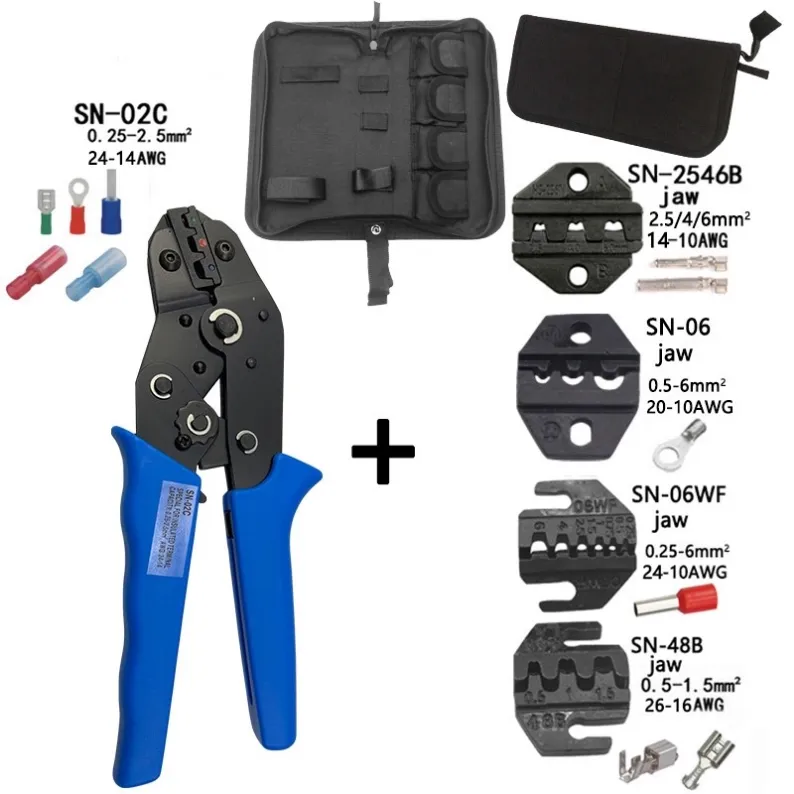
A crimp is a mechanical joint. The tool deforms the terminal barrel around the stripped wire strands under controlled pressure, pushing out the oxide layer and making direct metal-to-metal contact — a cold weld, gas-tight, with no heat-affected zone. Done correctly, the joint is stronger than the wire itself: pull it until it fails, and the strands break before the crimp separates. It keeps its flexibility at the point where the wire leaves the terminal, which is exactly where a harness flexes.
What a solder joint does in a car
Solder melts a filler metal into the strands. It makes a good electrical bond at first. The problem is what happens next. Solder wicks up the wire beyond the joint and turns flexible strands into a rigid section. The wire still flexes — now right at the edge of that rigid section, where strands fatigue and break. That is why soldered joints fail in vibration, and why production automotive harnesses are crimped, not soldered. Solder still has its place: on a circuit board, on a coaxial centre pin, or in a stationary, low-vibration repair where crimping is impossible. A moving harness is not that place.
The 3 mistakes that kill a crimp
- Wrong terminal for the wire. A terminal sized for 20–14 AWG will not hold a 22 AWG wire, and a terminal sized for 22–20 AWG will not take a 14 AWG wire. Match terminal size to wire gauge first — that is what the existing WireU guide on crimp terminal size by wire gauge covers, and it is the first check before any crimp.
- Soldering a crimp, or tinning the wire before crimping. Solder adds nothing to a good crimp and hides a bad one, while adding wicking and brittleness. Tinned strands are softer than copper and relax under the crimp. Do one or the other, correctly — for a harness, that means crimp, and no solder.
- Skipping the tug test. After crimping, tug the wire gently. After inserting the contact into the housing, tug again until you feel the click and the contact locks. A contact that was never seated will pass a bench test and fail on the road.
How this fits DEUTSCH housings
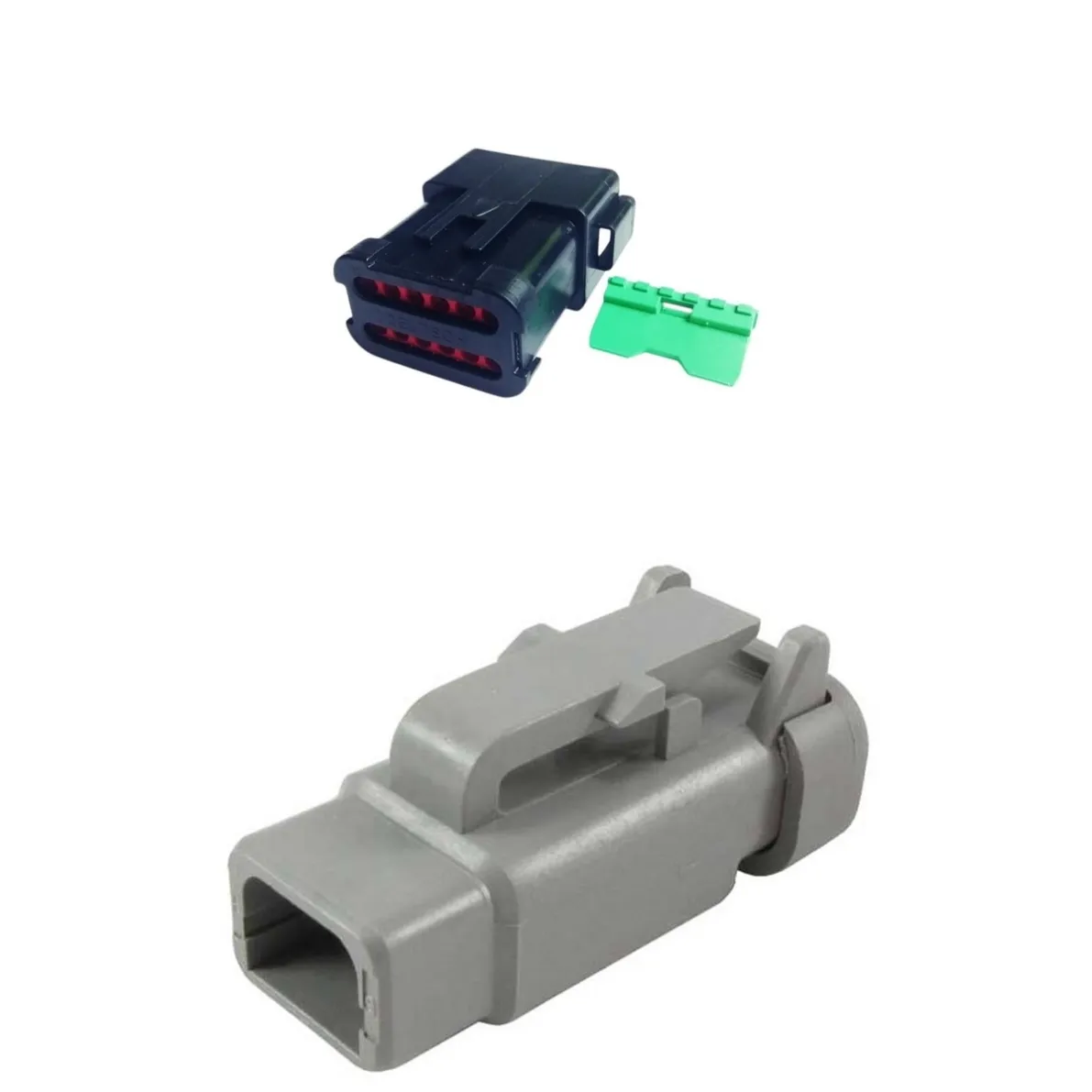
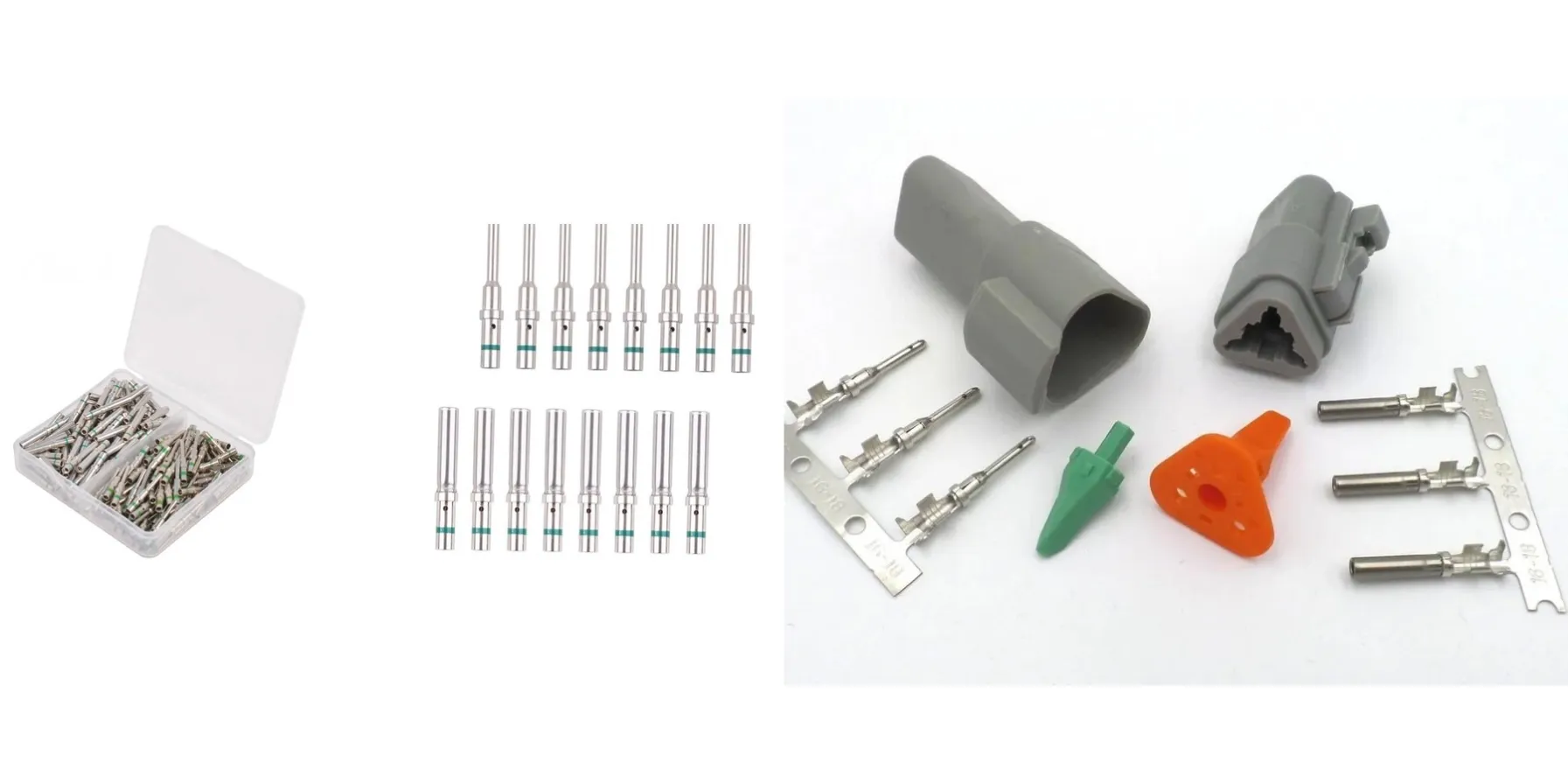
For DEUTSCH DT, DTM and DTP housings, the assembly sequence peers use is: crimp the pin or socket on the stripped wire, insert it into the rear of the housing through the silicone seal until it clicks, tug to confirm it is locked, then install the wedgelock and mate the two halves. Soldering is not recommended for these contacts. Solid contacts (0460 / 0462, machined) and stamped contacts (1060 / 1062, formed) both terminate the same way once crimped — the choice is crimp preference and application, not a different assembly.
A short checklist
- Terminal size matches wire gauge
- Strip clean, no nicked strands, no insulation in the crimp barrel
- Crimp, tug-test, insert, tug-test again, wedgelock, mate
- No solder on a crimped joint
A harness fails at its weakest joint. In a car, that joint should be a crimp — and it should be a good one.